

Weekly Market Commentary - Week Ending Saturday, October 10, 2026
The S&P 500 closed the week at 7,811.54, up 1.15% and within a fraction of its all-time high set earlier in the week. The Dow added 0.9% to finish near 51,655, while the Nasdaq rose 0.6%. Year-to-date, the S&P is up roughly 14%. Small caps lagged, with the Russell 2000 down nearly 1% on the week. Breadth improved into Friday, but the advance remains concentrated.
Beneath the surface, two forces continue to dominate: the powerful earnings-revision cycle centered on AI infrastructure and the persistent elevation in long-term interest rates. The 10-year Treasury yield closed the week near 5.24% after touching a 24-year high around 5.36% midweek. Brent crude settled near $105. These levels matter. Higher discount rates compress multiples on long-duration growth assets, while elevated energy prices support one of the strongest earnings stories outside of technology.
Earnings Season Begins in Earnest
Next week the third-quarter reporting season accelerates with the major banks—JPMorgan, Citigroup, Wells Fargo, and others—reporting Tuesday. Consensus expectations for S&P 500 earnings growth remain robust, clustering in the mid-to-high 20% range year-over-year depending on the data provider, with some estimates as high as the low 30s. This would mark the eighth consecutive quarter of double-digit growth and the third consecutive quarter above 25%.
Importantly, the revision trend has stayed constructive and has broadened. Estimates for the quarter have risen since June 30, led by Information Technology and Energy, with additional support from Financials, Industrials, and Materials in various datasets. Fifteen of sixteen Zacks sectors are expected to show positive year-over-year growth, and six are projected for double-digit gains. Energy stands out with estimates above 110–120%, reflecting the oil-price environment. Technology is expected to grow in the mid-40s to mid-60s percent range, driven heavily by semiconductors and AI infrastructure. Excluding Energy, index growth remains solidly in the high teens to low 20s; excluding Technology as well, it moderates further but stays positive.
This is the core of our process. We focus on the direction and breadth of earnings revisions, not headline multiples alone. Positive revisions, particularly when they are broad-based and accompanied by rising revenue expectations, have historically been a reliable leading indicator of relative performance. AI-related capital expenditure remains the single largest driver. Hyperscaler spending is projected to have accelerated again, and a handful of semiconductor and infrastructure names continue to account for a disproportionate share of index-level earnings growth. At the same time, we are watching for any deceleration in revision momentum or signs that the AI build-out is encountering constraints in power, capital, or end-user monetization.
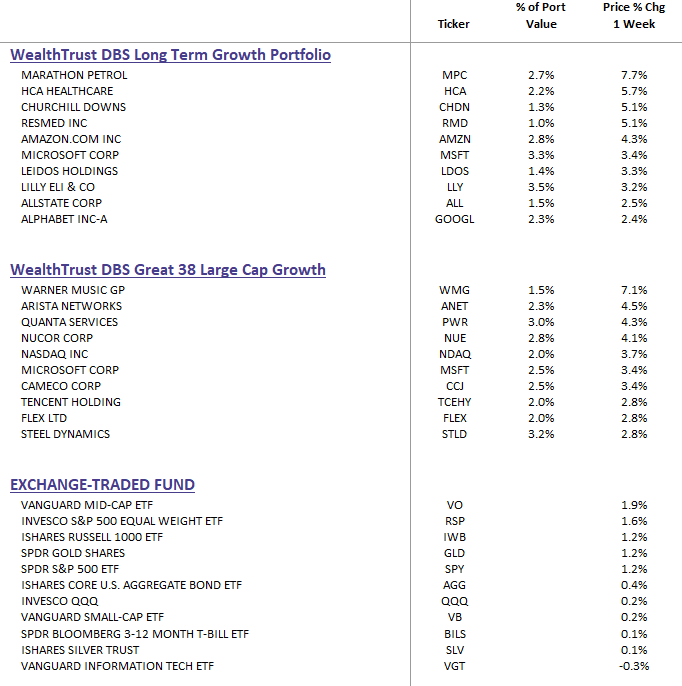
DBS Long-Term Growth & DBS Great 38 Large Cap Growth Top Ten and Benchmark Weekly Performance Summary
Sector Dynamics and Rotation
Energy has been a clear beneficiary of the geopolitical premium in oil prices. Middle East supply concerns, including ongoing tensions involving Iran and the Strait of Hormuz, have kept crude elevated even as some headlines suggested temporary de-escalation. Higher realized prices flow directly into earnings for producers and refiners. This is classic sector rotation driven by fundamentals rather than narrative.
Technology and AI-related momentum remain the dominant theme, but they are not monolithic. Memory and certain semiconductor names have faced periodic pressure on capacity concerns and high expectations, while software and services have shown relative resilience in places. Communication Services was the lone major sector to decline on Friday after SpaceX’s spectrum acquisition raised competitive questions for traditional wireless carriers. These are the kinds of cross-currents our quantitative screens are designed to capture—favoring names with accelerating revisions and disciplined sell rules when the data turn.
Financials enter the week with modest expected growth but will set the tone for credit quality, net-interest margins, and capital return in a higher-rate environment. Consumer-related sectors face a more mixed backdrop. University of Michigan sentiment has deteriorated, particularly among lower-income households facing higher living costs. We continue to prefer companies demonstrating pricing power and earnings resilience over pure cyclical exposure.
Macro and Risk Management
Next week’s inflation data—September CPI on the 14th and PPI shortly thereafter—will be closely watched. Softening labor data (recent payrolls were notably light) has tempered some near-term hike expectations. Yet, the Fed’s September minutes indicated most officials still anticipate another rate increase by year-end. Markets are pricing a low probability of a move at the late-October meeting and a higher chance in December. Elevated real yields remain the primary valuation headwind for equities.
Geopolitics and oil continue to inject volatility. Any sustained move higher or lower in crude will ripple through Energy earnings estimates and broader inflation expectations. We treat these as inputs to our risk framework rather than forecast variables. Our approach emphasizes downside protection through position sizing, sector diversification within the high-revision cohort, and clear sell rules tied to deteriorating fundamental momentum.
Outlook and Process
The setup remains constructive as long as earnings revisions stay positive and broad enough to support the index. Record or near-record highs alongside double-digit earnings growth are not inherently unstable, but concentration risk is real. A meaningful portion of growth is still tied to a relatively narrow group of AI infrastructure and energy names. Our numbers' first methodology continues to favor companies showing the strongest and most persistent upward revisions, while maintaining exposure to sectors benefiting from the current macro mix.
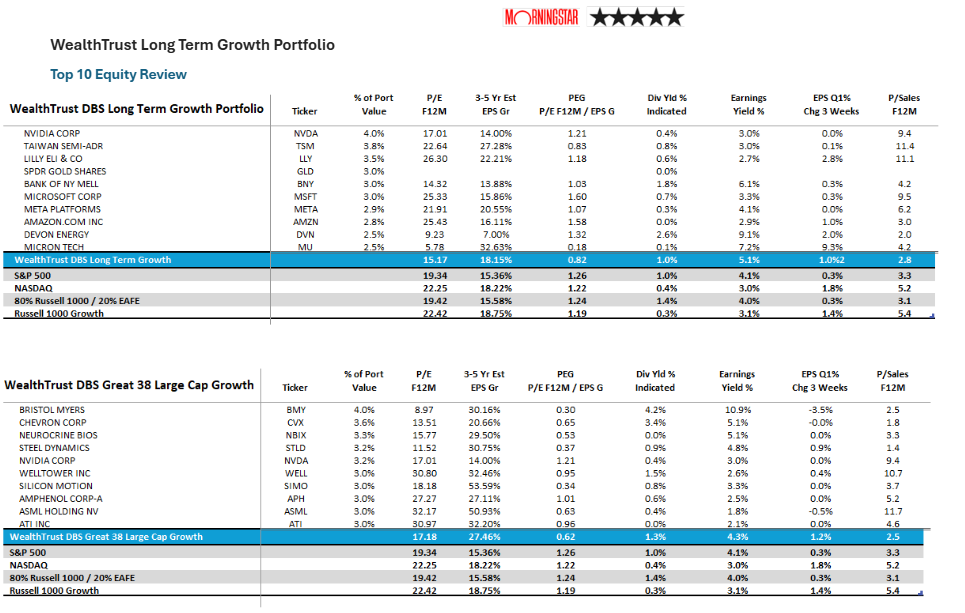
We remain active managers. Passive exposure captures the average; our process seeks to tilt toward the improving fundamental story and away from deteriorating ones. As bank results and inflation prints arrive next week, we will update our screens and rebalance accordingly.
Thank you for your time. Stay disciplined, focus on the numbers, and we will be back next week with the latest revisions and positioning updates.